Key takeaways
- A standalone POS is no longer enough; growing restaurants need systems that work together.
- The POS is the data engine that powers ordering, loyalty, marketing and analytics.
- Direct online ordering protects margins and customer ownership.
- Loyalty and marketing automation turn first-time guests into regulars with no manual work.
- Analytics and business intelligence move restaurant management from reactive to proactive.
Introduction: Restaurants Are No Longer Powered by Food Alone
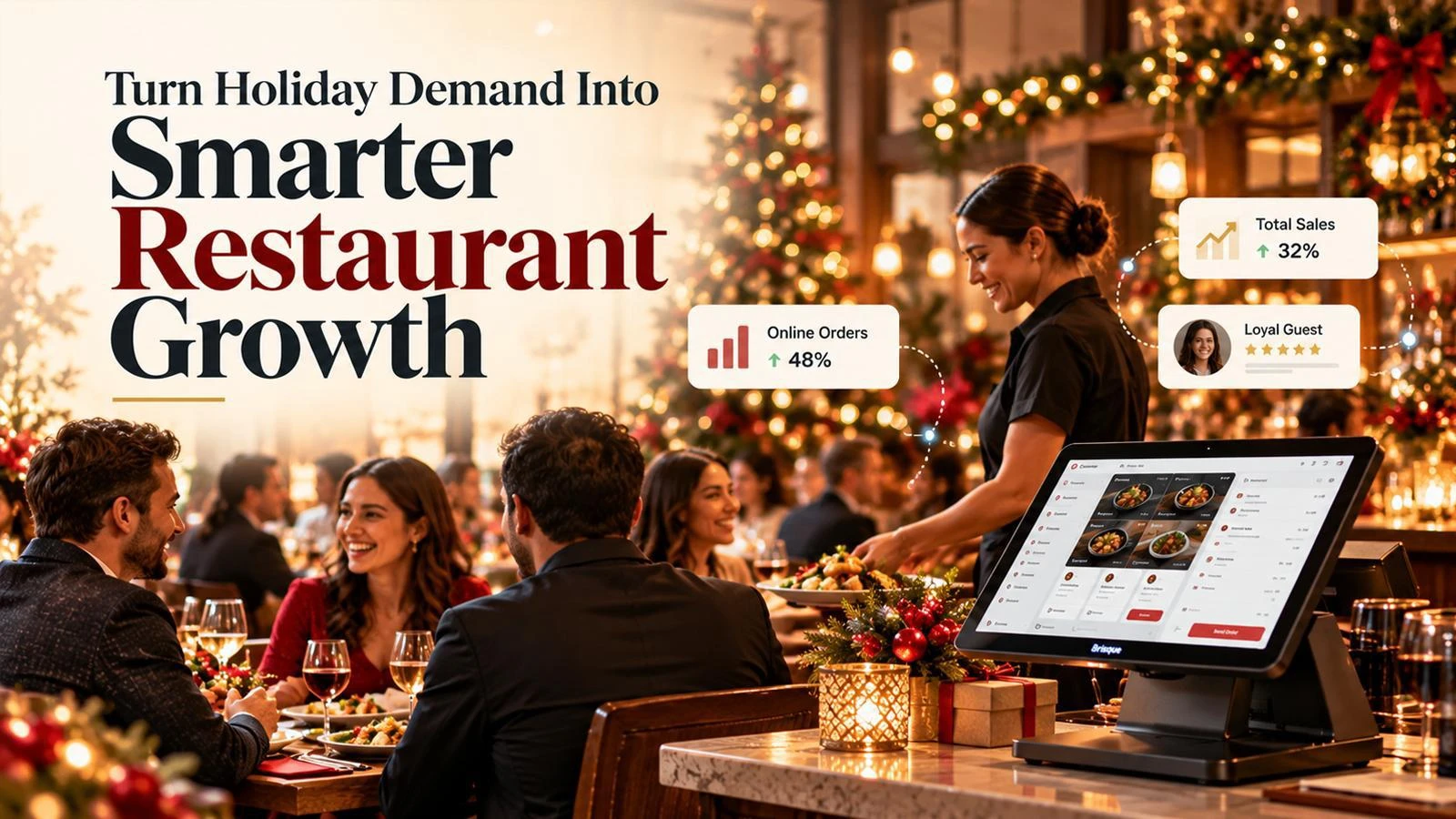
The restaurant industry is no longer powered by great food alone. In 2026, successful restaurants are leveraging a connected ecosystem of technology to streamline operations, improve customer experiences, and drive sustainable growth.
From AI-powered insights and online ordering to loyalty programs and business intelligence, restaurants are embracing a modern technology stack that helps them compete in an increasingly digital-first world. Major restaurant brands are investing heavily in AI, automation, loyalty platforms, and integrated data systems to improve efficiency and customer engagement.
The reality is simple: a standalone POS system is no longer enough. Today's growing restaurants need an integrated technology ecosystem where every system works together, from ordering and payments to marketing and analytics.
In this guide, we'll explore the essential components of the modern restaurant technology stack and how they help restaurants grow smarter in 2026.
Why Restaurants Need a Connected Technology Stack
Restaurant operators face more challenges than ever:
- Rising labor costs
- Increased customer expectations
- Growing online ordering demand
- Inventory management complexity
- Multi-channel customer interactions
Meanwhile, consumers expect seamless experiences whether they order online, dine in, use loyalty rewards, or interact through mobile devices.
Industry trends show that online ordering continues to represent a significant portion of restaurant revenue, while AI and automation are increasingly being used to improve forecasting, personalization, and operational efficiency.
The solution is a connected restaurant technology solution that unifies operations and customer engagement.
1. Restaurant POS System: The Foundation of Modern Restaurant Technology
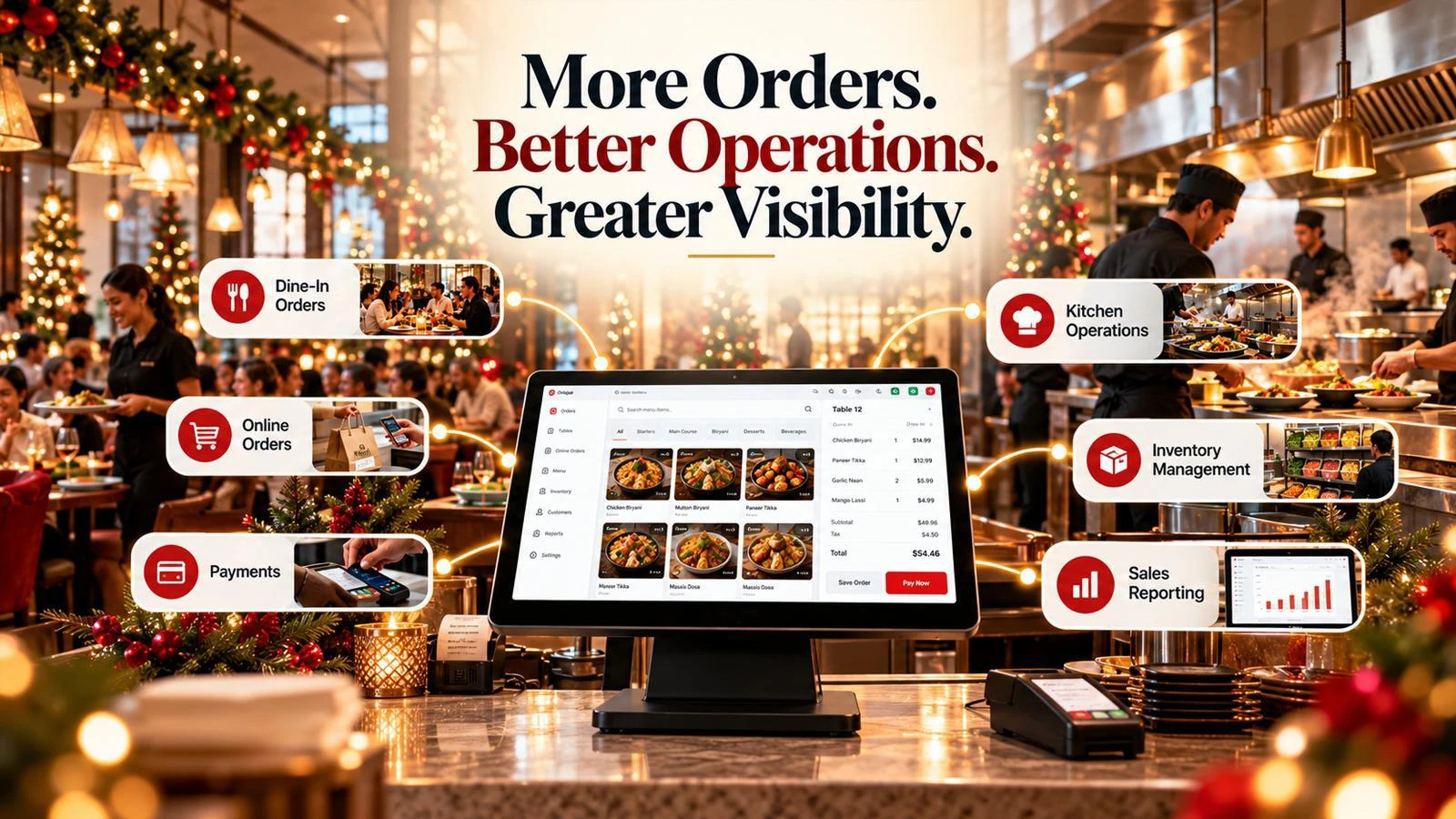
Every restaurant technology stack begins with a powerful Restaurant POS System. But in 2026, POS systems do much more than process payments. A modern POS serves as the central hub that connects:
- Orders
- Payments
- Inventory
- Customer profiles
- Loyalty programs
- Marketing campaigns
- Analytics dashboards
The best POS platforms allow restaurant owners to manage every aspect of their business from a single interface.
Key features restaurants need
- Cloud-based access
- Multi-location management
- Real-time reporting
- Online ordering integration
- Customer tracking
- Loyalty management
- Inventory synchronization
When connected properly, the POS becomes the data engine powering the rest of the technology stack.
2. Online Ordering System: The New Front Door
The rise of digital ordering has permanently changed consumer behavior. Restaurants that depend solely on third-party marketplaces risk losing customer ownership and paying high commission fees. Many operators are now prioritizing direct ordering channels and branded digital experiences.
A modern Online Ordering System should allow customers to:
- Order directly from the restaurant website
- Use mobile ordering
- Schedule pickups
- Track orders
- Redeem loyalty rewards
Benefits of direct online ordering
- Higher profit margins
- Better customer data
- Stronger customer relationships
- Increased repeat business
- Reduced dependency on aggregators
Online ordering is no longer an add-on feature. It is a core component of modern restaurant operations.
3. Restaurant Loyalty Program: Turning Guests into Regulars
Acquiring customers is expensive. Retaining them is profitable. That is why every growing restaurant should have a robust Restaurant Loyalty Program. Loyalty programs help restaurants:
- Increase visit frequency
- Improve customer retention
- Encourage repeat purchases
- Gather valuable customer insights
Many restaurant chains are investing heavily in integrated loyalty systems because personalized rewards have proven effective in increasing customer engagement and retention.
Modern loyalty program features
- Points-based rewards
- Birthday promotions
- Referral incentives
- Personalized offers
- Mobile wallet integration
The most successful loyalty programs are fully connected to the POS and customer database.
4. Restaurant Marketing Automation: Working Smarter, Not Harder
Marketing should not depend entirely on manual effort. Modern restaurants are increasingly adopting Restaurant Marketing Automation to engage customers automatically based on behavior and purchase history.
Automated marketing examples
- Birthday rewards
- Welcome offers
- Re-engagement campaigns
- Abandoned order reminders
- Loyalty milestone rewards
Imagine a customer who hasn't visited in 30 days. The system automatically sends: "We miss you! Enjoy 15% off your next visit." No manual work required.
Why automation matters
- Save time
- Improve customer retention
- Increase repeat visits
- Deliver personalized experiences
Restaurants are increasingly using AI-driven personalization to improve engagement and drive revenue growth through targeted promotions.
5. Inventory Management Software: Protecting Profit Margins
Inventory is one of the largest cost centers in any restaurant. Without proper controls, restaurants face:
- Food waste
- Overstocking
- Stockouts
- Lost profits
Modern Inventory Management Software integrates directly with POS systems, so every sale automatically updates inventory levels.
Key benefits
- Real-time stock tracking
- Automated reorder alerts
- Recipe costing
- Waste monitoring
- Supplier management
Industry data shows that integrated inventory solutions can significantly reduce food waste and improve forecasting accuracy. This helps operators make better purchasing decisions while maintaining healthy margins.
6. Restaurant Payment Processing: Creating Frictionless Experiences
Today's customers expect payment flexibility. A modern Restaurant Payment Processing solution should support:
- Credit cards
- Mobile wallets
- Contactless payments
- QR payments
- Online payments
- Split payments
Fast and secure payment experiences improve customer satisfaction and reduce checkout friction. When payment systems are integrated with POS and loyalty programs, customer experiences become seamless.
7. Restaurant Analytics Dashboard: Turning Data into Decisions
Data is one of the most valuable assets a restaurant owns. Yet many operators only scratch the surface of what their data can reveal. A modern Restaurant Analytics Dashboard provides visibility into:
- Sales trends
- Customer behavior
- Menu performance
- Staff productivity
- Inventory consumption
- Marketing effectiveness
Restaurants using analytics platforms are improving forecasting accuracy, reducing waste, and making better business decisions.
Questions analytics can answer
- Which menu items generate the highest profit?
- Which promotions drive the most sales?
- When are peak ordering times?
- Which customers visit most frequently?
Data-driven restaurants consistently outperform those operating on assumptions.
8. Restaurant Business Intelligence: The Competitive Advantage
Technology generates data. Restaurant Business Intelligence transforms that data into actionable insights. Business intelligence tools combine information from:
- POS systems
- Loyalty programs
- Marketing campaigns
- Online ordering
- Inventory management
This creates a complete view of restaurant performance.
Example
A restaurant owner discovers:
- Burgers sell best on weekends
- Loyalty members spend 25% more
- SMS campaigns outperform email
- Certain ingredients are driving waste
With these insights, better decisions become possible. Business intelligence transforms restaurant management from reactive to proactive.
The Rise of the AI-Driven Technology Stack
One of the biggest trends in 2026 is the emergence of the AI-driven technology stack. Restaurants are increasingly using AI for:
- Demand forecasting
- Inventory planning
- Personalized marketing
- Labor scheduling
- Customer recommendations
- Voice ordering
Major brands including McDonald's, CAVA, Applebee's, IHOP, and others are actively investing in AI-powered operations and customer engagement systems.
AI is no longer a future concept. It is becoming a practical business tool that helps restaurants make smarter decisions and improve efficiency.
How Brisque Fits into the Modern Restaurant Tech Stack
As restaurants evolve, they need technology that connects every part of the business. Brisque helps restaurants unify:
- Restaurant POS System
- Online Ordering System
- Restaurant Loyalty Program
- Restaurant Marketing Automation
- Inventory Management Software
- Restaurant Analytics Dashboard
- Restaurant Payment Processing
- Restaurant Business Intelligence
Instead of managing multiple disconnected systems, restaurant operators can gain a complete view of their business from one connected platform.
Conclusion: Building the Restaurant of the Future
The restaurants that thrive in 2026 will not necessarily be the largest. They will be the smartest. Success increasingly depends on having the right technology ecosystem in place. A modern restaurant technology stack combines:
- A powerful Restaurant POS System
- Direct Online Ordering
- Loyalty Programs
- Marketing Automation
- Inventory Management
- Payment Processing
- Analytics Dashboards
- Business Intelligence
Together, these tools create a connected, data-driven operation that improves efficiency, strengthens customer relationships, and drives sustainable growth.
The future of restaurant success is no longer about managing separate tools. It's about creating one intelligent ecosystem that helps restaurants operate smarter, serve customers better, and grow faster.
Ready to connect your restaurant technology?
See how Brisque brings your POS, online ordering, loyalty, marketing and analytics together in one connected platform.
Talk to Our Specialists