Key takeaways
- Maghil is now Brisque: a new name and a bigger vision, with the same commitment to restaurants.
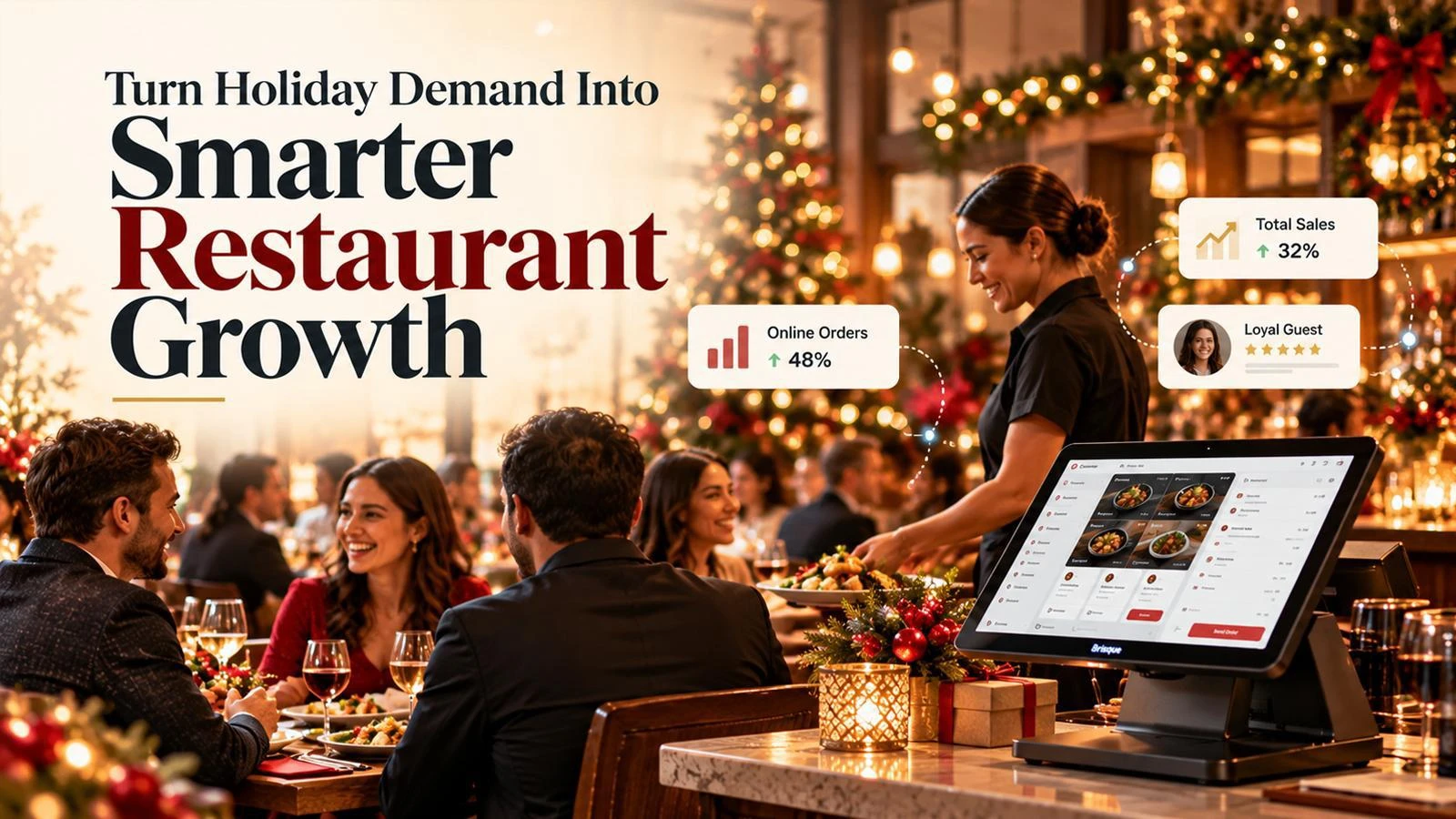
- Brisque is being built as a Smart Restaurant Growth Platform, not just a POS.
- Connected POS, payments, ordering, inventory, loyalty and analytics give owners one operational view.
- AI should remove friction and support staff, keeping the human side of hospitality.
A New Brand, A Bigger Vision for Smarter Restaurant Growth
The restaurant industry has changed dramatically over the last few years. Customers now expect restaurants to offer faster ordering, convenient digital payments, personalized experiences, online ordering, loyalty programs, and seamless service across every channel. At the same time, restaurant owners are under constant pressure to control operating costs, manage labor, reduce waste, increase repeat business, and make better decisions with limited time.
Technology has become central to solving these challenges. That is where our next chapter begins.
Maghil is now Brisque.
The name is changing, but the commitment to helping restaurants operate better remains the same. Brisque represents a broader vision for the future of restaurant technology, one that brings together POS, payments, ordering, customer engagement, automation, analytics, and Artificial Intelligence to help restaurants move from simply managing daily operations to building smarter, more sustainable growth.
Brisque is being built as a Smart Restaurant Growth Platform, designed to connect the operational and customer-facing sides of a restaurant business through technology.
From Maghil to Brisque: A New Brand, A Bigger Vision
The transition from Maghil to Brisque is more than a change in name or visual identity. It reflects the evolution of the technology behind the business and the growing needs of restaurant operators.
The restaurant business has become increasingly connected. A customer may discover a restaurant through social media, browse its menu online, place an order through a restaurant's website, pay digitally, earn loyalty rewards, and return weeks later because of a personalized promotion. Behind that experience, the restaurant needs systems that can communicate with one another.
A modern Restaurant Technology Platform needs to connect those experiences rather than leave restaurant owners managing multiple disconnected tools. Brisque's vision is centered on creating that connected environment.
The goal is straightforward: make restaurant technology easier to use, more intelligent, and more valuable to the people running the business.
Why Restaurant Technology Needs to Evolve
A traditional POS system primarily records transactions. A modern restaurant needs much more. Restaurant operators need to know which menu items are selling, when demand is highest, how inventory is moving, which customers are returning, which promotions are working, and where operational inefficiencies are affecting profitability.
A modern Restaurant POS System can become the operational center of the business when it connects sales, payments, ordering, inventory, tables, customers, and analytics. This shift is already visible across the restaurant industry.
McDonald's, for example, has described its broader digital transformation as "Digitizing the Arches," with cloud infrastructure, AI-enabled kitchens, customer technology, and operational systems forming part of its restaurant technology strategy. Its Edge platform extends cloud capabilities into restaurants, while AI-enabled systems are being used to improve order accuracy and operational precision.
Starbucks is taking a similar approach from a different angle. In 2026, the company described using AI to support employees, intelligently sequence orders, improve forecasting, match staffing to demand, and make digital experiences more personalized.
These examples demonstrate an important point: Artificial Intelligence is not replacing the restaurant. It is increasingly being used to remove friction from the restaurant experience. That is the direction Brisque is designed to support.
Brisque Restaurant POS: More Than Billing
At the center of a modern restaurant operation is the Brisque Restaurant POS. A POS should not be viewed simply as a checkout terminal. It can serve as the connection point between front-of-house operations, kitchen workflows, payments, online orders, inventory, customer information, and business reporting.
For restaurant operators, this means fewer disconnected processes and better visibility into what is happening across the business. A restaurant may have dine-in customers, takeaway orders, online orders, delivery orders, and repeat customers interacting with the business at the same time. A connected POS environment helps bring these activities into one operational view.
The objective is not technology for technology's sake. It is to make everyday restaurant management simpler.
AI-Driven POS: Moving From Recording Data to Understanding It
The next evolution of restaurant technology is the AI-driven POS. Traditional POS technology answers questions such as: "What did we sell today?" AI-powered restaurant technology aims to go further: "What is likely to happen next, and what should we do about it?"
This distinction is important. Artificial Intelligence can analyze patterns in sales, customer behavior, ordering activity, and operational data to identify trends that may not be immediately obvious to a restaurant manager.
- Historical sales patterns can help a restaurant understand busy periods and popular menu items.
- Customer purchasing behavior can inform more relevant promotions.
- Inventory patterns can help operators identify products that move quickly or slowly.
AI therefore has the potential to turn restaurant data into practical business intelligence. The industry is already moving in this direction. Starbucks has publicly discussed its use of AI and predictive technology to support personalization, forecasting, scheduling, equipment management, and customer experiences.
Payment Systems Are Part of the Customer Experience
Payments have evolved from a back-office function into an important part of the customer experience. Customers increasingly expect fast, secure, and convenient payment options whether they are ordering at the counter, dining at a table, ordering online, or picking up food.
Modern Payment Systems need to work seamlessly with the restaurant's POS and ordering environment. When payments, orders, and sales information are connected, restaurant teams can reduce manual steps and provide a smoother checkout experience. Integrated payment technology can also make transaction data easier to reconcile and analyze.
The objective is simple: make payment feel effortless for the customer while making the process easier to manage for the restaurant.
Table Management System: Creating a Better Dine-In Experience
For full-service and casual restaurants, managing tables efficiently can have a direct impact on the customer experience and restaurant revenue. A Table Management System helps restaurant teams understand table availability, reservations, seating, order status, and table turnover.
Instead of relying entirely on handwritten notes or verbal communication, restaurant teams can work from a centralized digital view. This becomes particularly valuable during peak periods when every minute matters. The right technology can help restaurants coordinate seating and service more efficiently while giving managers better visibility into the dining room.
Automated Inventory Tracking Can Reduce Waste and Guesswork
Restaurants deal with perishable ingredients, changing demand, portion requirements, supplier deliveries, and unpredictable customer traffic. Manual inventory processes can consume significant staff time and still leave room for errors.
Automated Inventory Tracking provides a more connected approach. When inventory information is linked to sales and purchasing activity, restaurants can better understand consumption patterns and stock levels. The long-term opportunity is even greater when Artificial Intelligence is introduced, as predictive systems can potentially help restaurants anticipate demand and make more informed purchasing decisions.
This matters because food that is over-purchased can become waste, while insufficient inventory can result in unavailable menu items and disappointed customers. Technology cannot eliminate every inventory challenge, but it can give restaurant operators better information to make decisions.
Cloud-Based Restaurant POS Gives Owners More Visibility
Restaurant businesses are increasingly distributed across locations, devices, and channels. A Cloud-based Restaurant POS allows authorized users to access business information without depending entirely on a single physical system at a restaurant location.
For a multi-location operator, this can be especially valuable. Management can monitor sales performance, review operational data, manage menus, and gain visibility across locations from a centralized environment. Cloud technology also supports a more flexible approach to software updates, data access, and integration.
The restaurant technology ecosystem is moving increasingly toward cloud-connected infrastructure. McDonald's, for example, has highlighted its use of cloud infrastructure directly within restaurants as part of its broader digital transformation.
Online Ordering Is Now Part of the Restaurant Journey
The modern restaurant customer does not think in terms of "offline" and "online" restaurants. They simply expect the restaurant to be available when and where they want it. Online Ordering has therefore become an important part of restaurant operations.
A customer may discover a restaurant online, browse the menu, place an order, receive updates, and return later through another digital channel. The challenge for restaurant operators is ensuring that these digital interactions connect with the rest of the business. A restaurant technology platform can bring online orders into the same operational environment as in-store transactions, helping reduce manual order entry and improve visibility.
Current restaurant consumer behavior reinforces this trend. DoorDash's 2026 Restaurant Industry Trends Report found that customers increasingly move across discovery, ordering, dining, and return visits through connected channels, with personalization becoming an important part of that journey.
Loyalty Is About Relationships, Not Just Rewards
A successful restaurant does not only need to attract new customers. It needs to give existing customers a reason to return. A modern Loyalty Platform can help restaurants build stronger relationships by connecting customer activity with relevant rewards and communication.
Instead of treating every customer identically, restaurants can use purchase and engagement data to understand preferences and create more meaningful interactions. This is where AI and customer data can work together. A customer who regularly orders a particular type of meal may respond differently to an offer than someone who visits only occasionally. Understanding these patterns gives restaurants an opportunity to make loyalty programs more relevant.
Large restaurant brands have already demonstrated the importance of digital loyalty ecosystems. McDonald's, for example, operates a large-scale digital loyalty program and has described customer data as an important component of its broader technology strategy. For independent and growing restaurant businesses, the opportunity is to bring the same principle of connected customer engagement into a more accessible technology environment.
AI-Powered Restaurants Should Still Feel Human
One misconception about AI in restaurants is that greater automation means less human interaction. The better approach is the opposite. Technology should handle repetitive tasks so restaurant employees can spend more time doing what technology cannot replace: welcoming customers, preparing food with care, solving problems, and creating memorable experiences.
Starbucks has explicitly described this philosophy in its 2026 AI strategy, emphasizing that technology should support employees and strengthen human connection rather than replace it. Its AI tools are being used to reduce interruptions and help employees access information during service.
The best technology is often the technology customers barely notice because it simply makes the experience work better.
From Restaurant POS to Restaurant Growth Platform
The future of restaurant technology is not about having more software. It is about having better-connected software. A restaurant owner should not have to look at one system for sales, another for inventory, another for online orders, another for loyalty, and another for analytics without those systems communicating effectively.
This is why Brisque is positioning itself as a Smart Restaurant Growth Platform. The bigger vision is to connect the operational and growth sides of the restaurant business. That means bringing together capabilities such as:
- Restaurant POS
- Cloud-based restaurant management
- Payment Systems
- Table Management System
- Online Ordering
- Automated Inventory Tracking
- Customer Loyalty
- Marketing
- Analytics
- Artificial Intelligence
When these capabilities work together, restaurant operators gain a clearer picture of their business and more opportunities to act on that information.
What the Brisque Rebrand Means for Restaurants
For existing customers, the most important message is simple: Maghil is now Brisque. The rebrand represents a new identity and a larger vision, not a change in the commitment to customers.
The same focus on restaurant businesses continues, while the Brisque brand is being developed around a broader technology vision that includes AI, automation, connected operations, customer engagement, and smarter restaurant growth. For restaurant owners evaluating technology, this means Brisque is looking beyond the traditional definition of a POS provider. The opportunity is to create a technology partner that helps restaurants manage today's operations while preparing for tomorrow's opportunities.
What Comes Next for Restaurant Technology?
The next stage of the restaurant technology industry will likely be defined by connected systems, predictive intelligence, and increasingly personalized customer experiences. AI-powered ordering, intelligent forecasting, automated workflows, personalized loyalty, predictive analytics, and connected payment experiences are already moving from experimentation toward practical applications.
McDonald's is testing AI-powered ordering technology, while Starbucks is using AI to support employee workflows, ordering, forecasting, and customer experiences. The lesson is not that every restaurant needs to copy the world's largest chains. The lesson is that technology is becoming an increasingly important part of how restaurants compete.
The opportunity for growing restaurants is to adopt the right technology at the right time, and use it to make the business more efficient without losing the human experience that makes hospitality special.
Conclusion: A New Name for a Bigger Restaurant Technology Vision
Maghil is now Brisque. The new name represents a bigger ambition for restaurant technology: moving beyond transactions and toward intelligent, connected restaurant growth.
From a Brisque Restaurant POS and integrated Payment Systems to Online Ordering, Table Management, Automated Inventory Tracking, Loyalty Platforms, cloud technology, and Artificial Intelligence, the goal is to bring the essential pieces of restaurant operations and growth closer together.
The restaurant of the future will not simply be digital. It will be connected, intelligent, responsive, and increasingly personalized. Brisque is building toward that future.
A new brand. A bigger vision. Smarter technology for smarter restaurant growth. Maghil is now Brisque.
See what the new Brisque can do for your restaurant
Talk to our team about how Brisque connects POS, payments, ordering, loyalty and analytics into one smart restaurant growth platform.
Talk to Our Specialists